NEW
Stress & Emotions
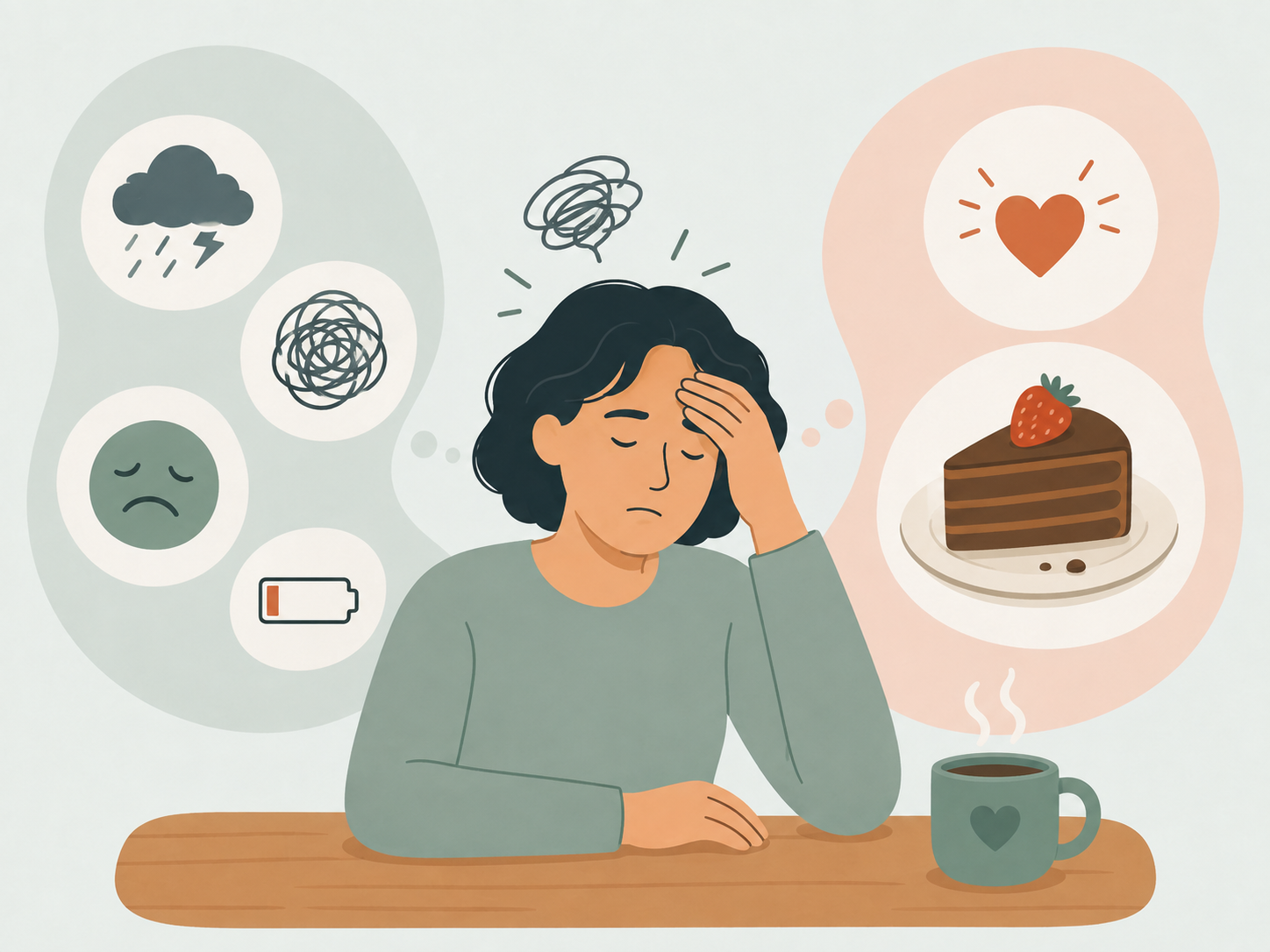
Can Stress Cause Physical Hunger? What the Evidence Says
Explore the evidence on whether stress can cause physical hunger, and learn how to notice the difference between hunger and stress-driven urges.
Learn with NourishNot
Practical, evidence-informed guides designed to help you understand what may be happening before an urge to eat, without turning every food decision into a test.
Stress & Emotions
Explore the evidence on whether stress can cause physical hunger, and learn how to notice the difference between hunger and stress-driven urges.
Hunger & Cravings
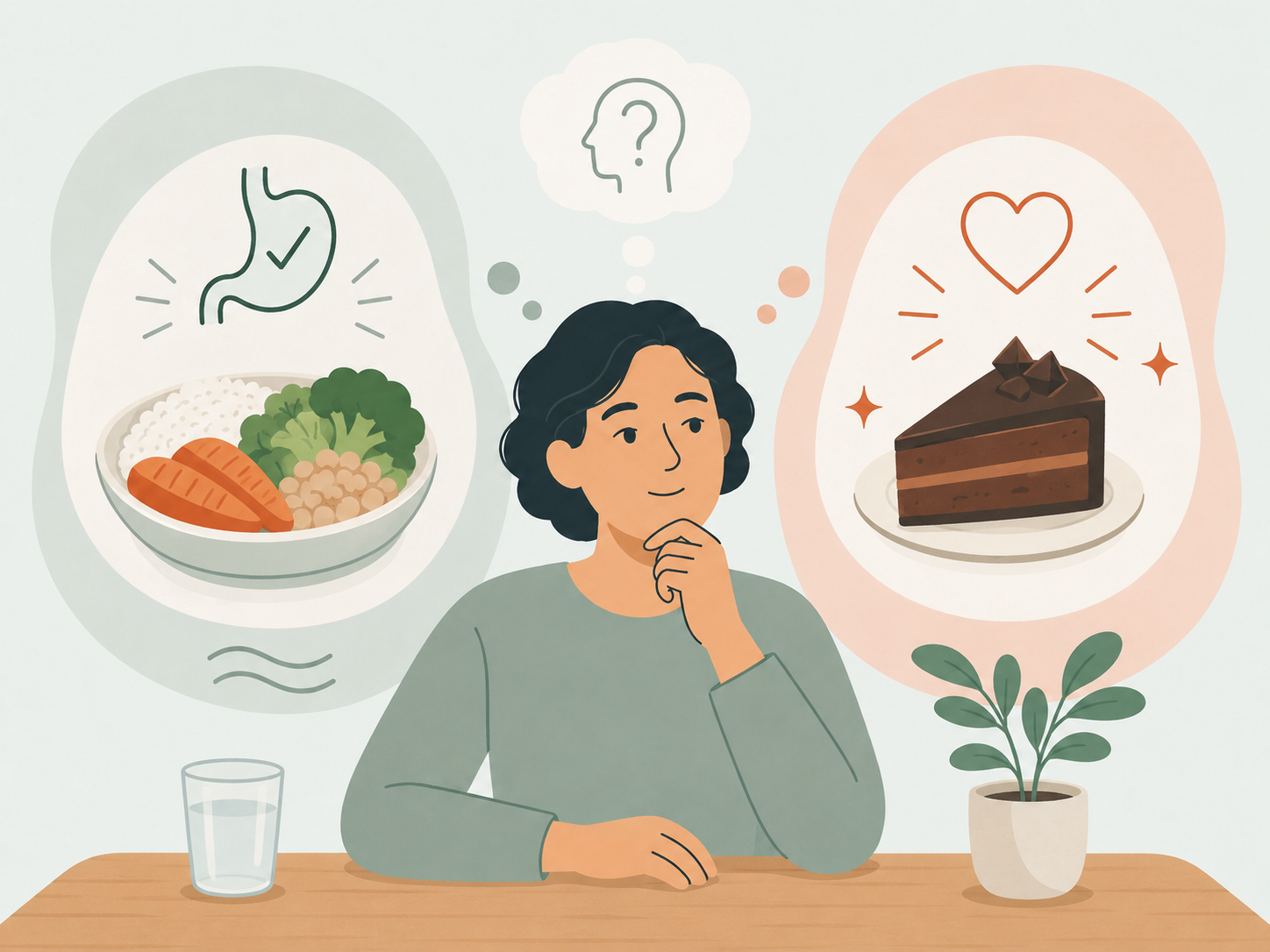
Learn why food smells can trigger cravings, how learned associations and physiological responses play a role, and how prolonged exposure may reduce appetite. Discover how to notice your own patterns.
Hunger & Cravings
Learn how conditioned food cravings form and how noticing your patterns can help you change them.
Sleep & Fatigue
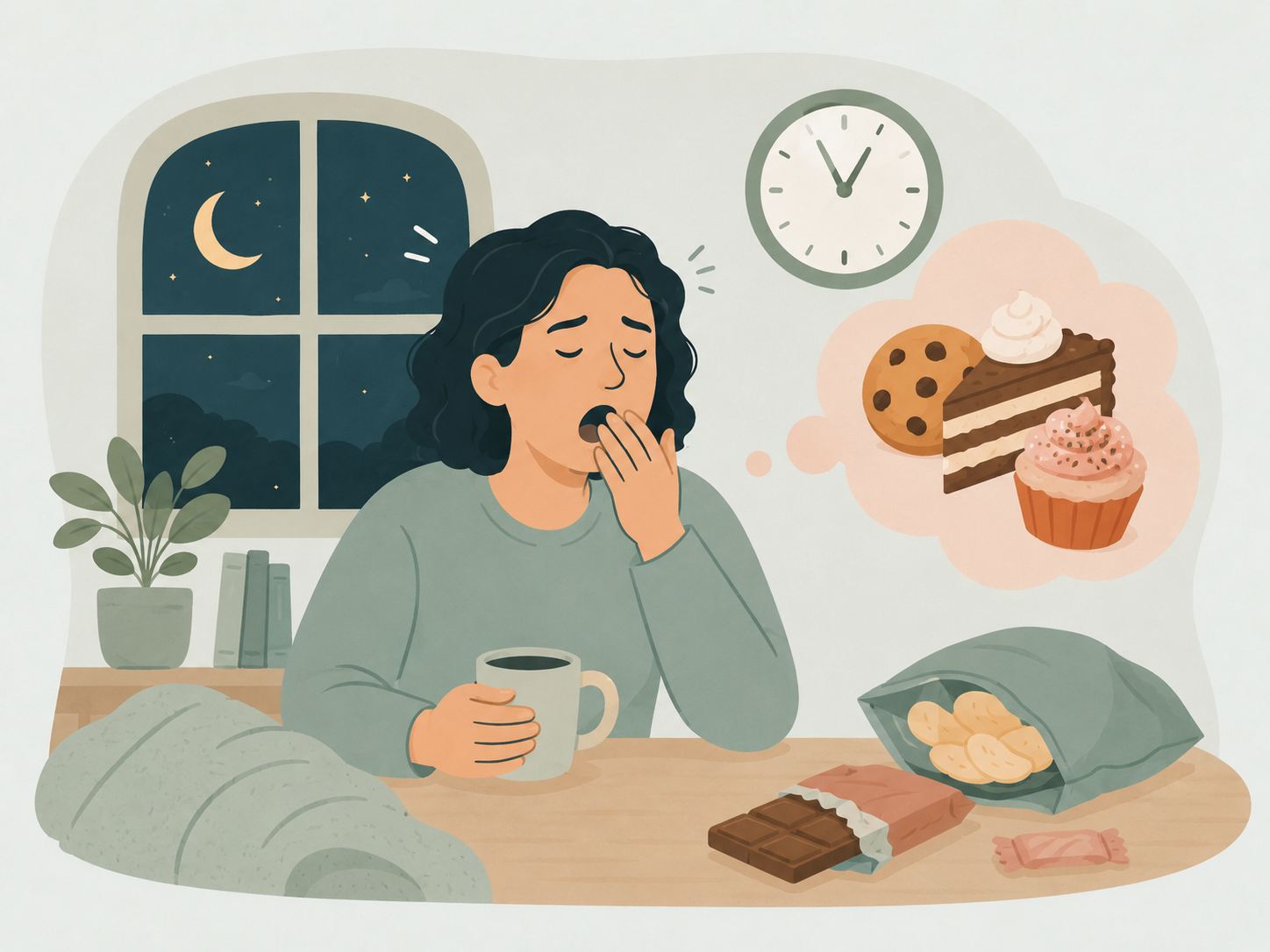
Learn how sleep deprivation may affect hunger and cravings, and how to notice your own patterns.
Hunger & Cravings
Feeling full and wanting dessert can happen together because fullness and dessert-specific desire are not the same signal. Notice the pattern around the urge without turning it into a rule.
Sleep & Fatigue
Hunger and food desire can change across the day. Learn how circadian timing may shape appetite and why evening cravings can feel different from daytime urges.
Hunger & Cravings
Learn what food cue reactivity is and how noticing your triggers can help you understand your eating patterns.
Stress and patterns
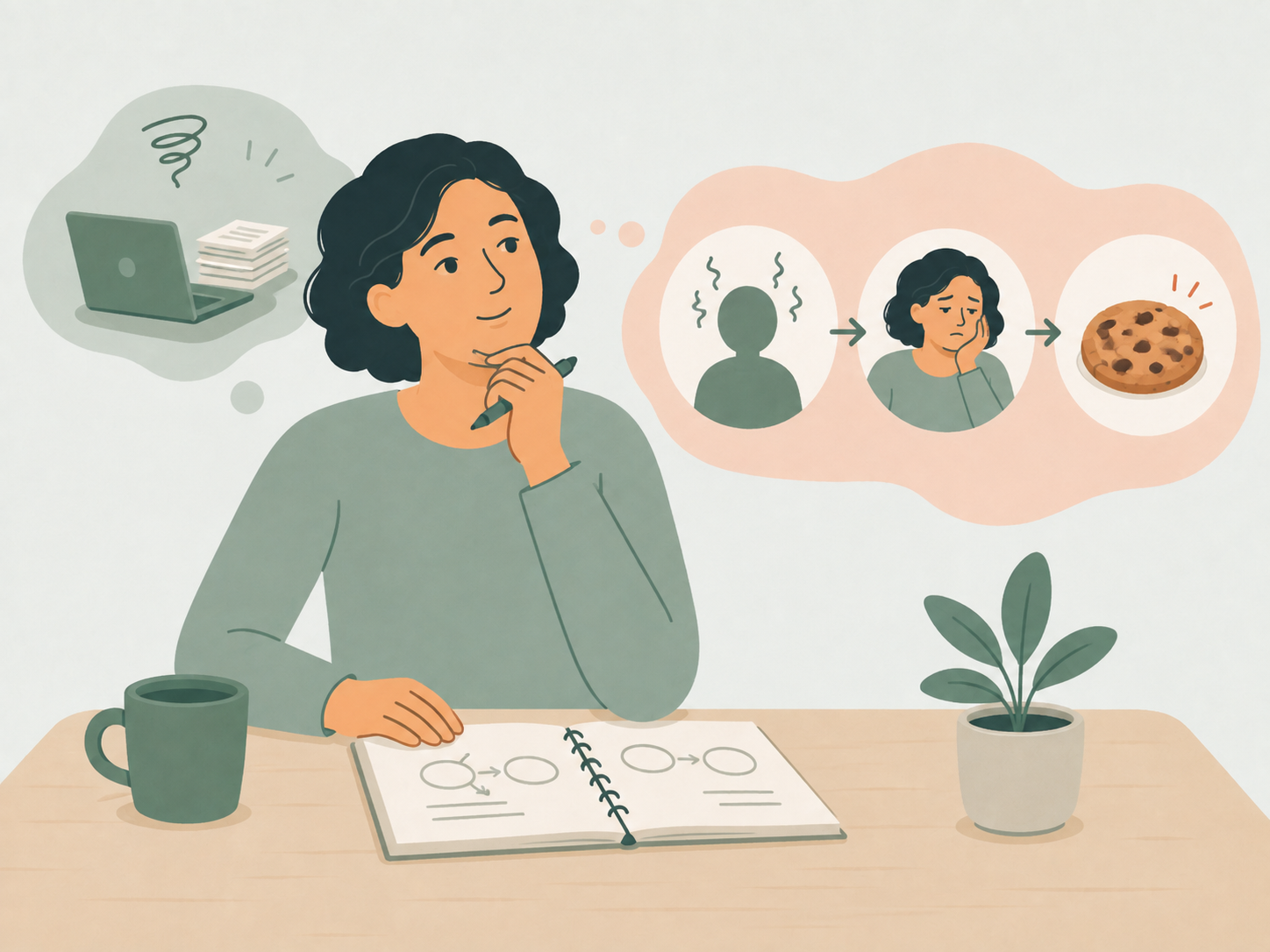
Stress eating is not one universal pattern. Learn how timing, triggers, transitions and relief can help you identify what stress-related eating looks like for you.
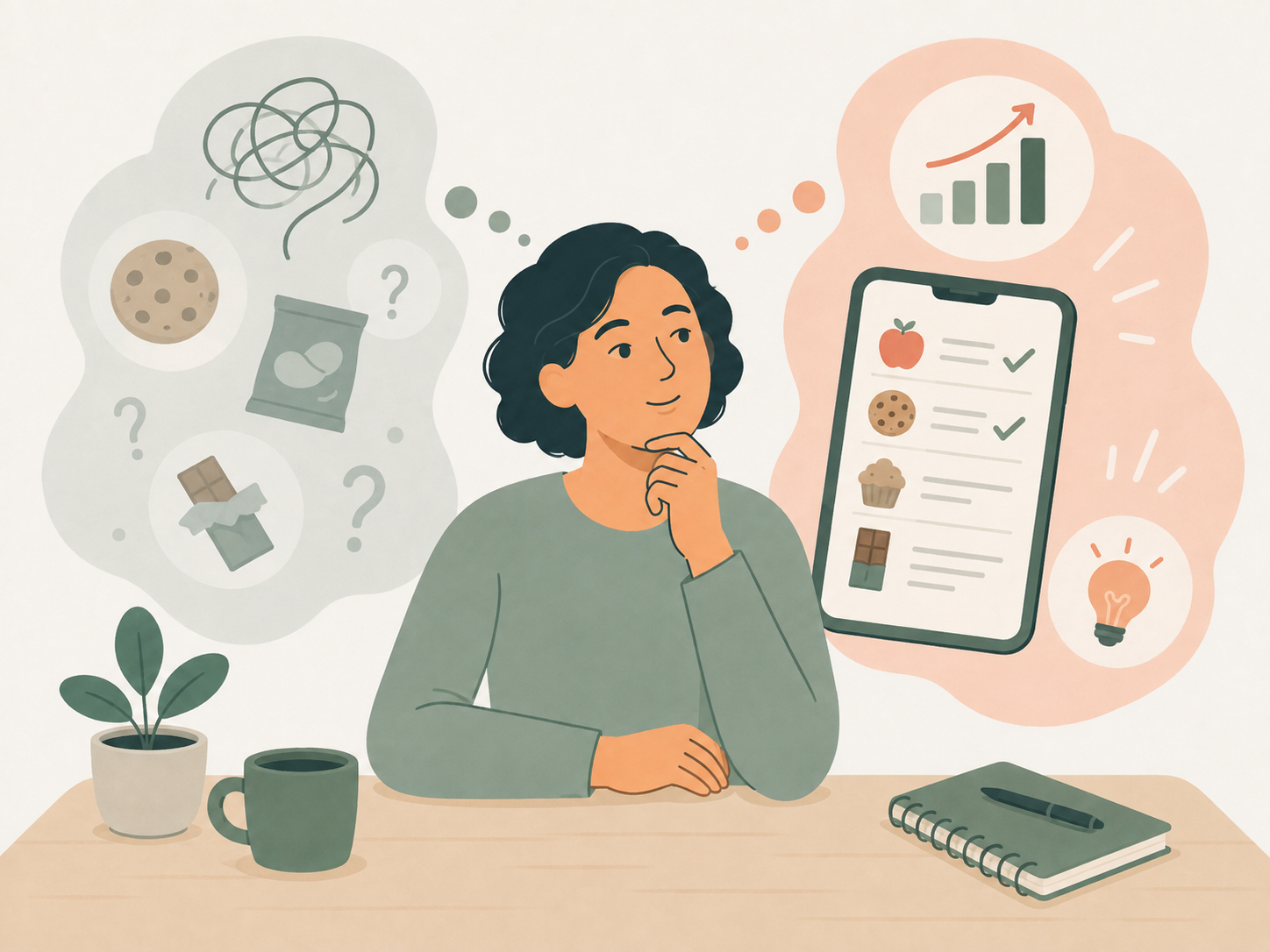
Pattern tracking
Memory can capture the headline but lose the context. Learn why tracking cravings in the moment can reveal patterns that are difficult to reconstruct days later.
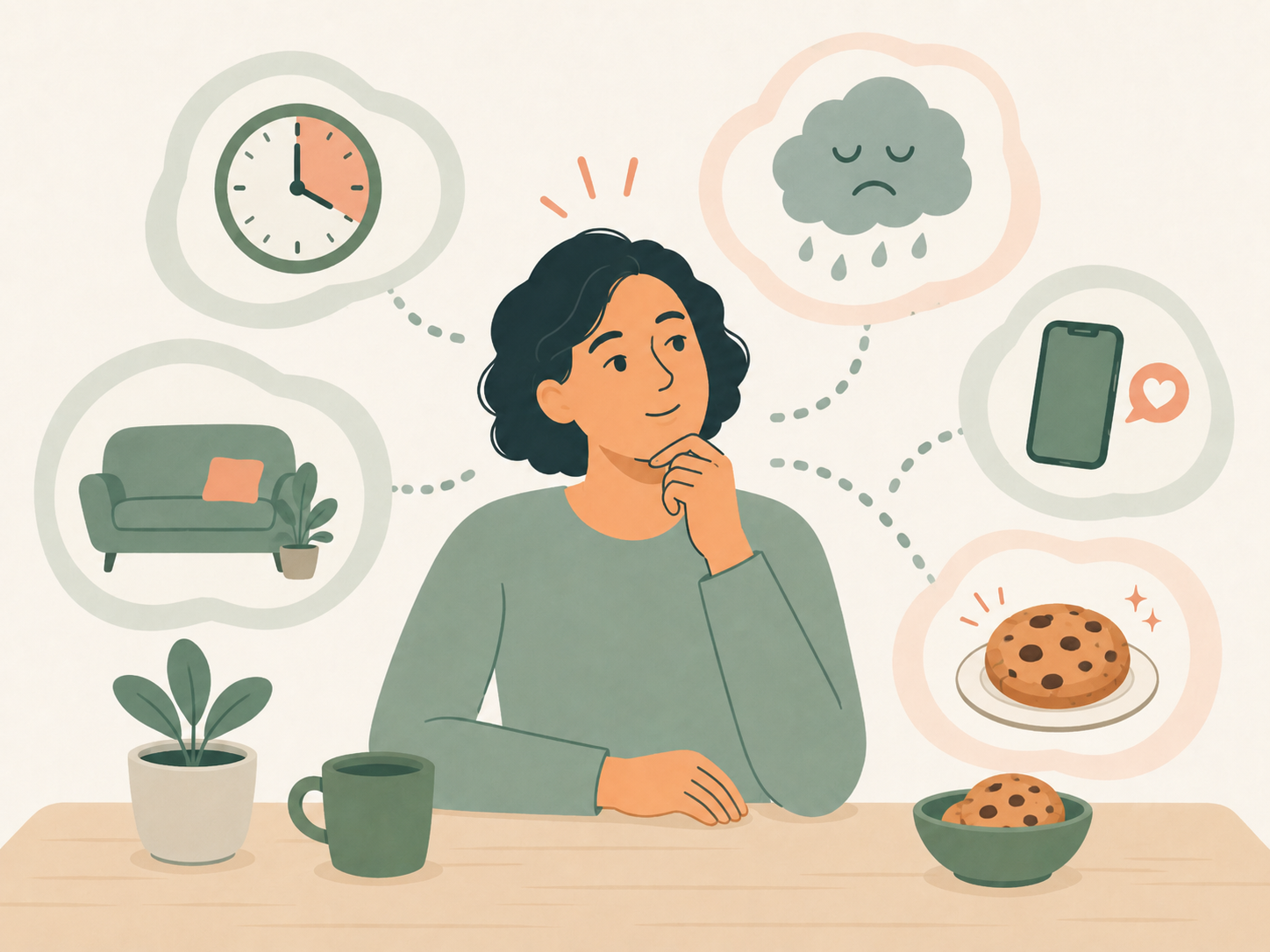
Patterns and cravings
“I just felt like eating” may be the end of a longer sequence. Learn how time, cues, emotion, routines and transitions can quietly shape the urge to eat.
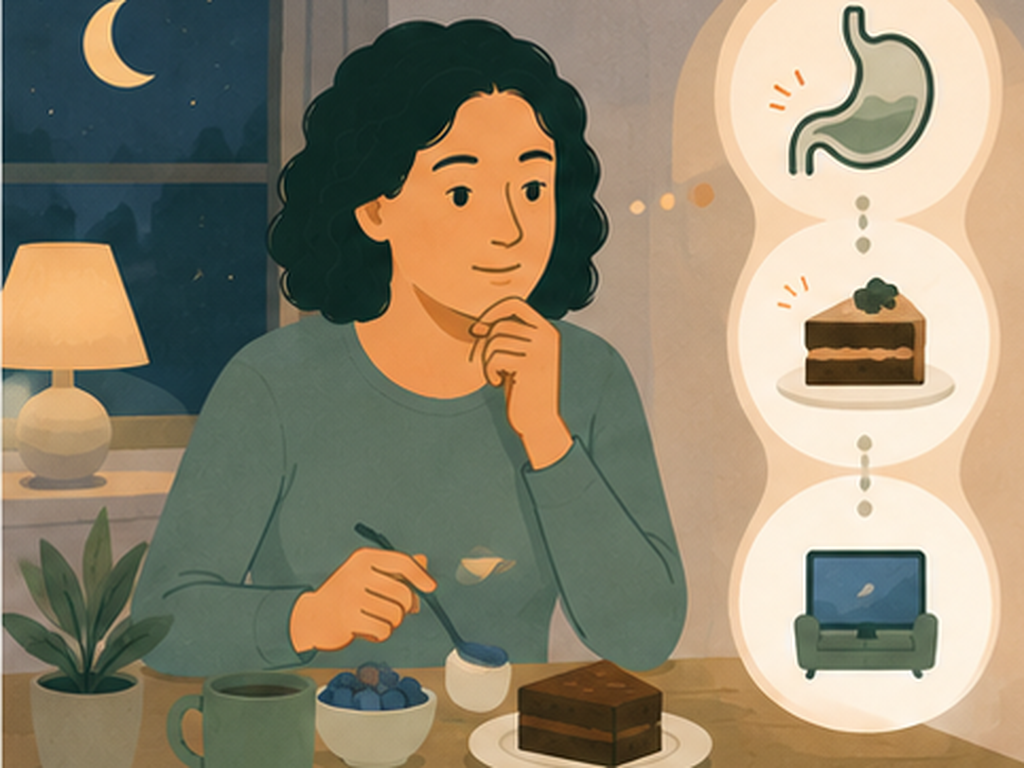
Nighttime cravings
Wanting a snack after dinner can reflect hunger, dessert expectations, food cues, routine or reward. Learn what to notice when the urge shows up night after night.
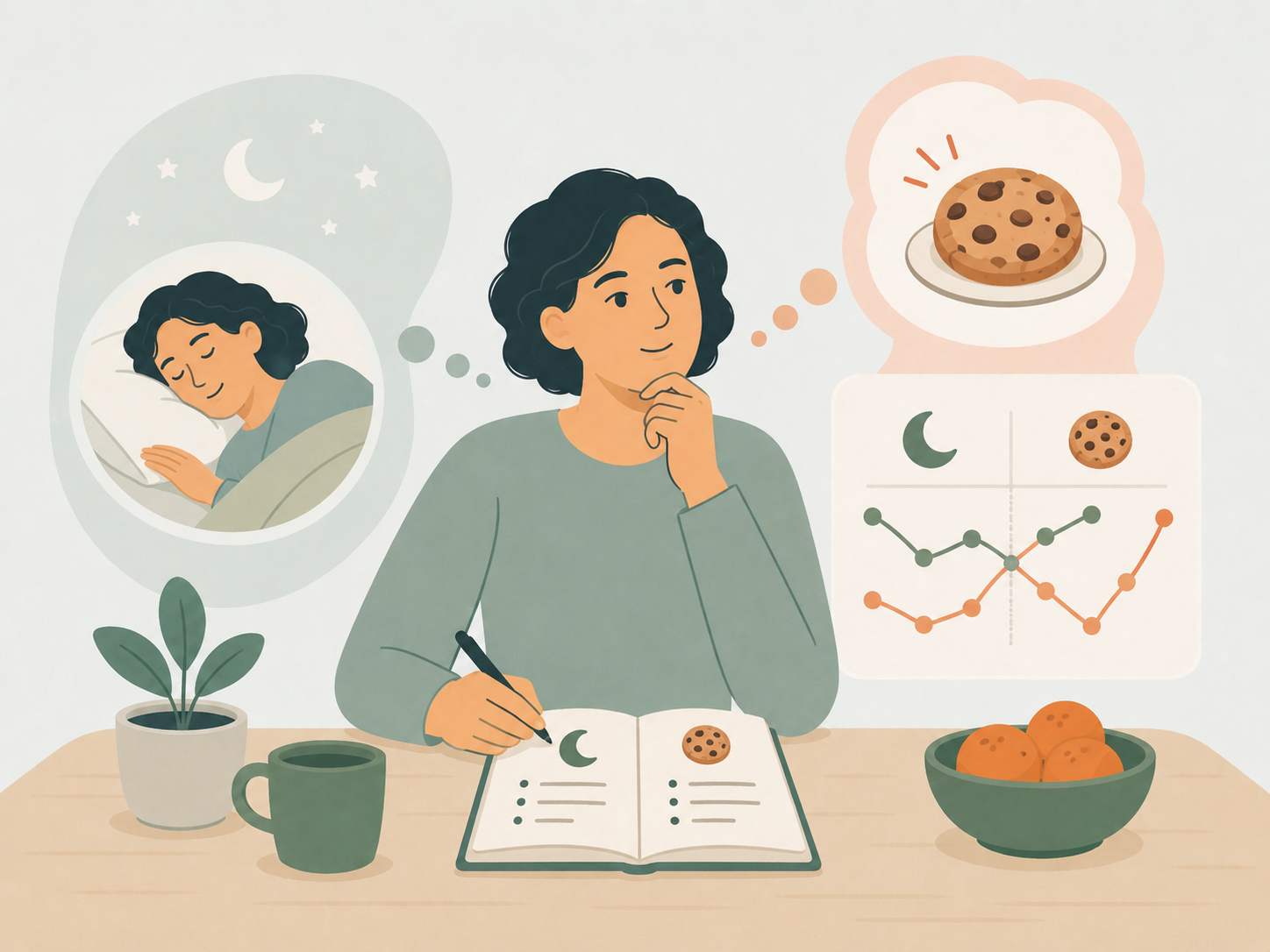
Sleep and patterns
Poor sleep can influence hunger and food reward. Learn how to compare your own craving timing and intensity with sleep rather than judging one tired-day craving.
These guides are educational and are not a substitute for medical, nutritional or mental-health care. If eating patterns are causing significant distress or loss of control, consider speaking with a qualified professional.